Guiding patients and partners through their prostate cancer journey
Men recently diagnosed with prostate cancer go through a lot of emotionally challenging phases from the moment they hear the bad news. They deal with a lot of uncertainty around their prognosis, their treatment options, the available resources, and so on. Clinicians don’t have a lot of time to answer all the questions patients and their caretakers may have. Online resources are not always equally reliable or easy to understand.
Project: TrueNTH Assist website
Client: Movember Foundation and Prostate Cancer Canada (2016)
Responsibilities: user research, Information Architecture (IA), interaction design, visual design (support), prototyping, usability testing
Goal
We were asked to create an online information portal for men diagnosed with prostate cancer. Our goal was to provide patients and their partners with a single virtual library where they can find reliable, comprehensive online resources that will support and guide them and their caregivers in the various stages of their prostate cancer journey.
Approach
Together with 3 other designers and a group of Toronto and Vancouver based researchers we worked towards a fitting solution. We did many rounds of design iterations with low and high fidelity wireframes. Various interviews and usability tests were done with current and former prostate cancer patients, partners of current and former prostate cancer patients and support group leaders. These interviews and tests gave us a better understanding of their needs and motivations. We also gained insight on the usefulness and usability of various prototypes and the final product.

Part of the team, working hard on the TrueNTH Assist wireframes
Insights
Throughout the months we were working on this project we found a few key insights that significantly impacted the outcomes of this project.
Prostate cancer patients and their caregivers often form a team — they are in it together. Oftentimes the partners are the ones doing most of the research.
The variety of patients and caregivers we interviewed had different information needs and took different routes to search for information, depending on personal preferences and/or which stage of the journey they are in.
Most patients and caregivers want to know who wrote a certain article and where it came from to see if it is trustworthy.
The amount of prostate cancer related information that is available on the internet is often overwhelming.
When patients search the internet for specific information on prostate cancer they often find contradicting or confusing results.
Users vary in expertise when it comes to navigating the internet. Some people are more savvy than others.
Results
We designed a web-portal with comprehensive and trustworthy content. Some articles are written by knowledge experts contracted by TrueNTH. Other articles are carefully curated by the same knowledge experts.
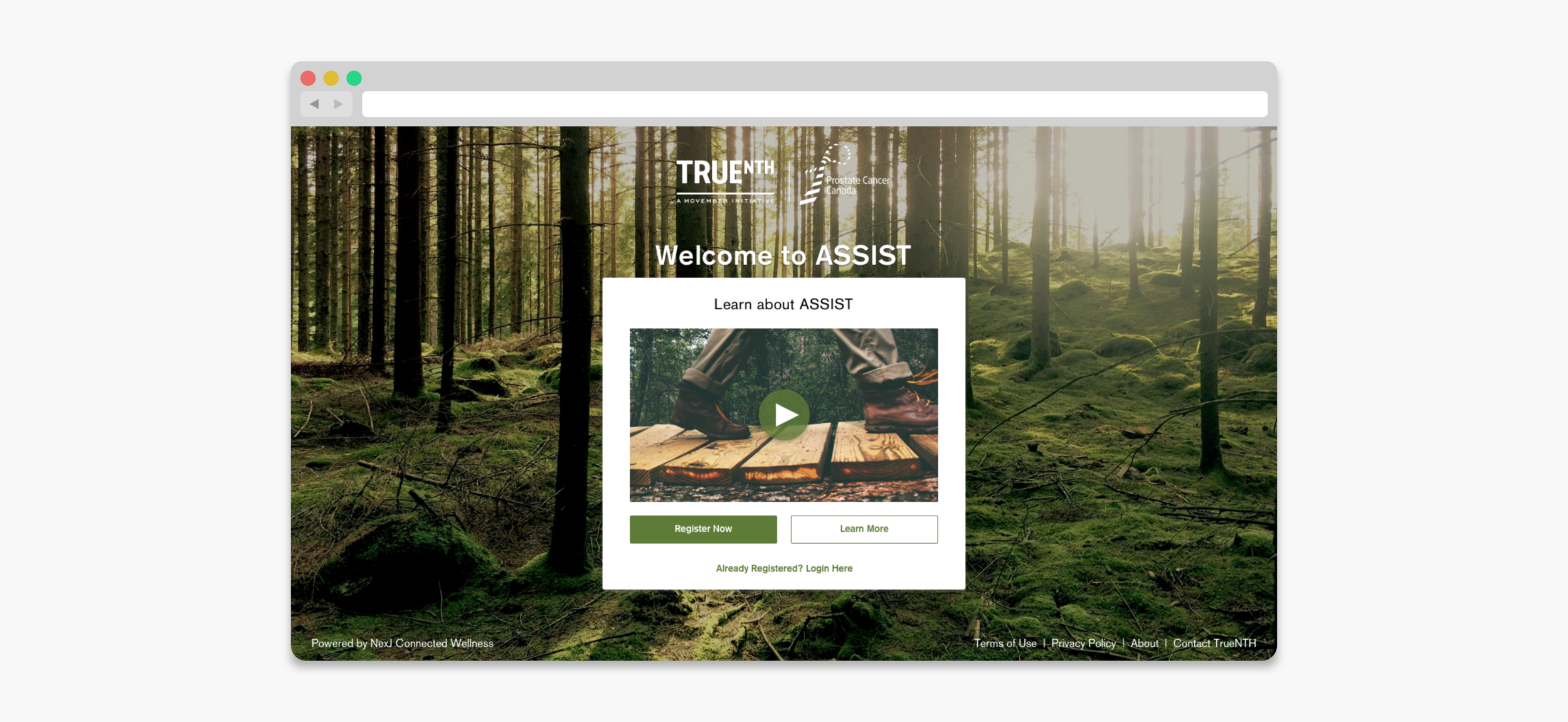
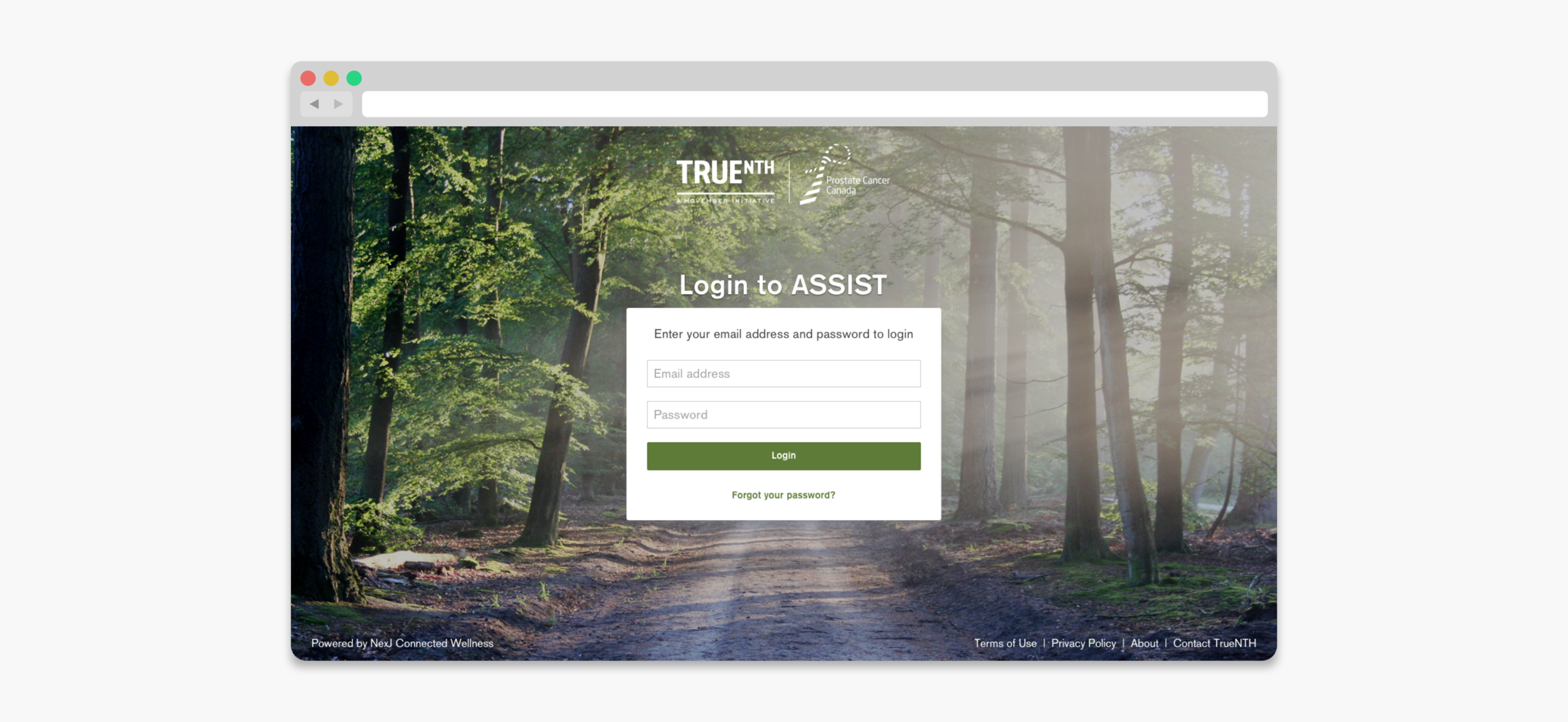
When users land on the web-portal they can learn what Assist is about. The ‘Learn More’ section explains whom Assist is for and how it works.
Welcome page, Login age and Learn More page

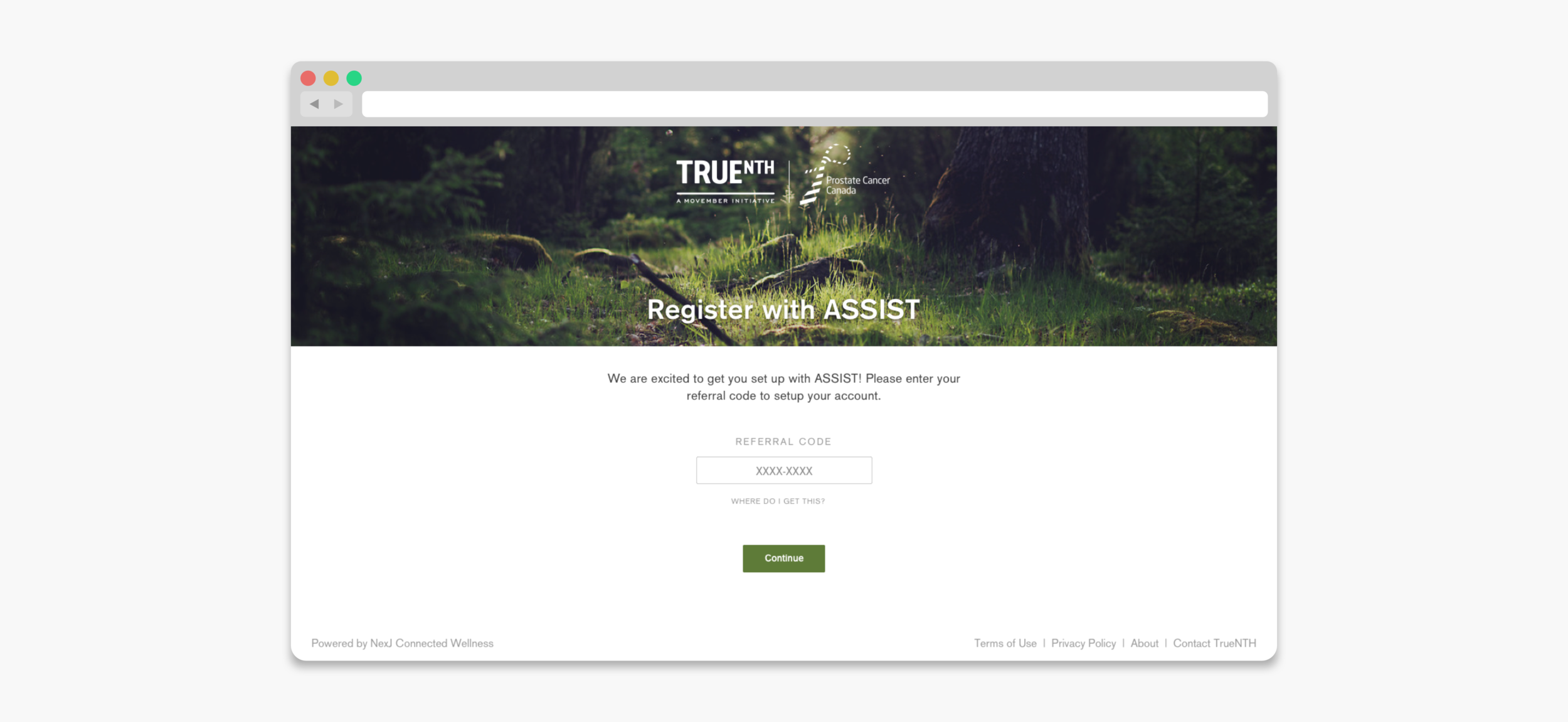
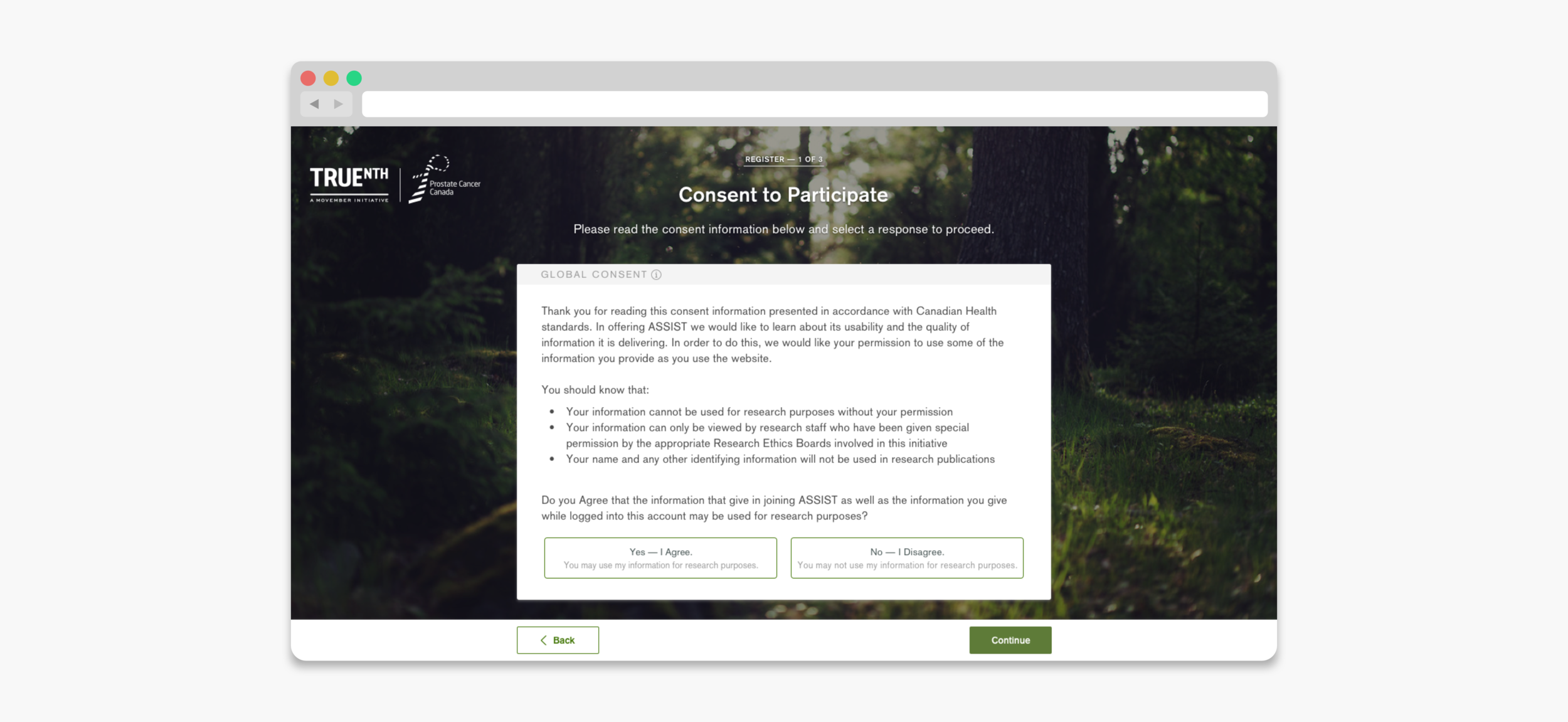
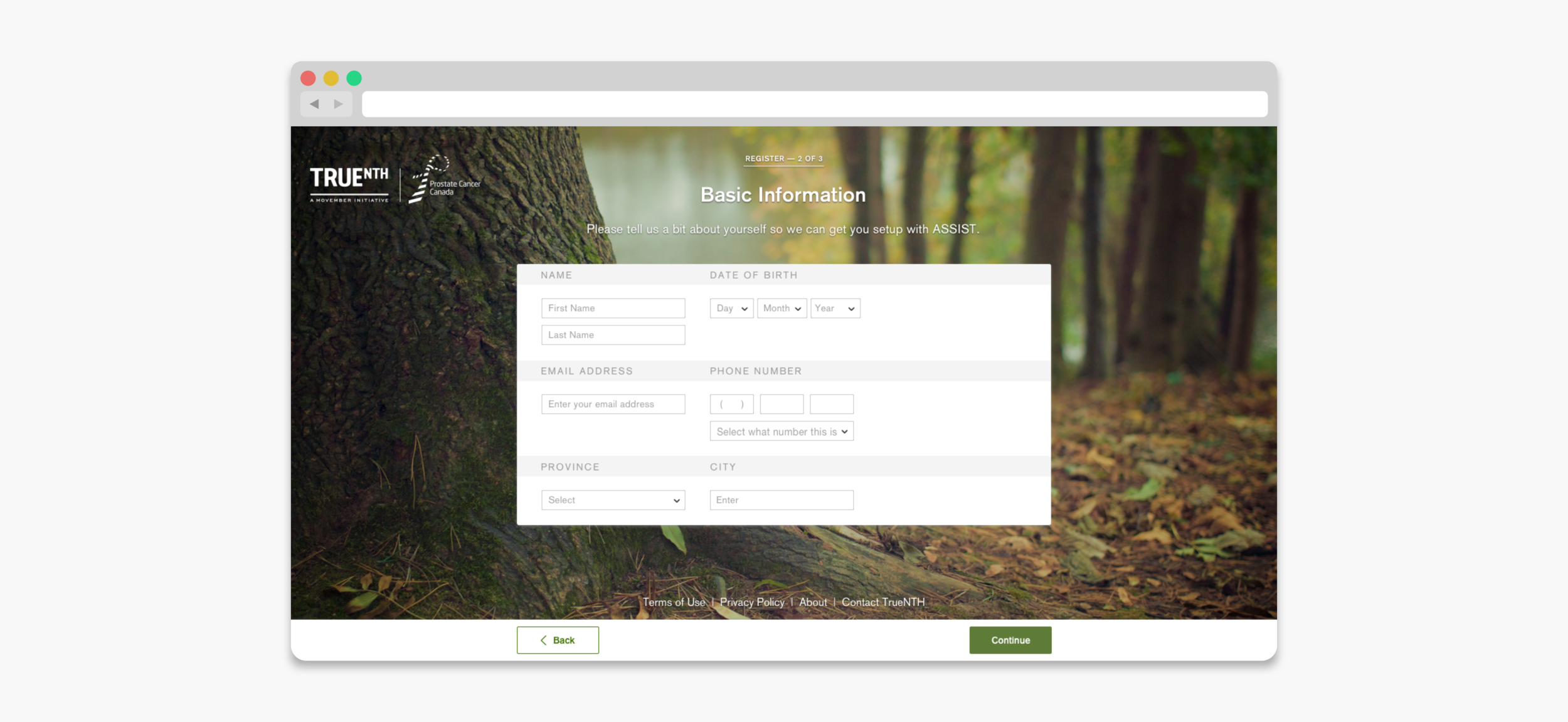
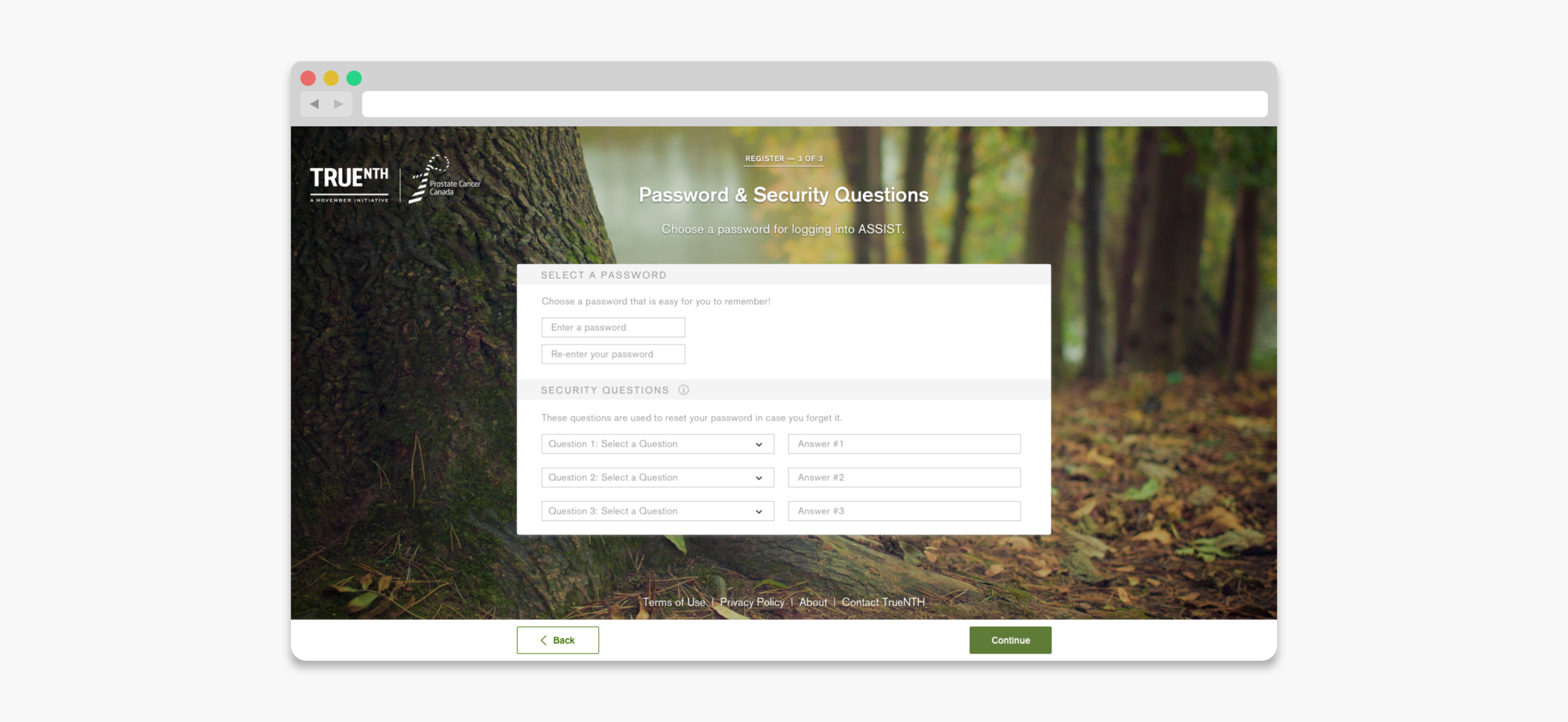
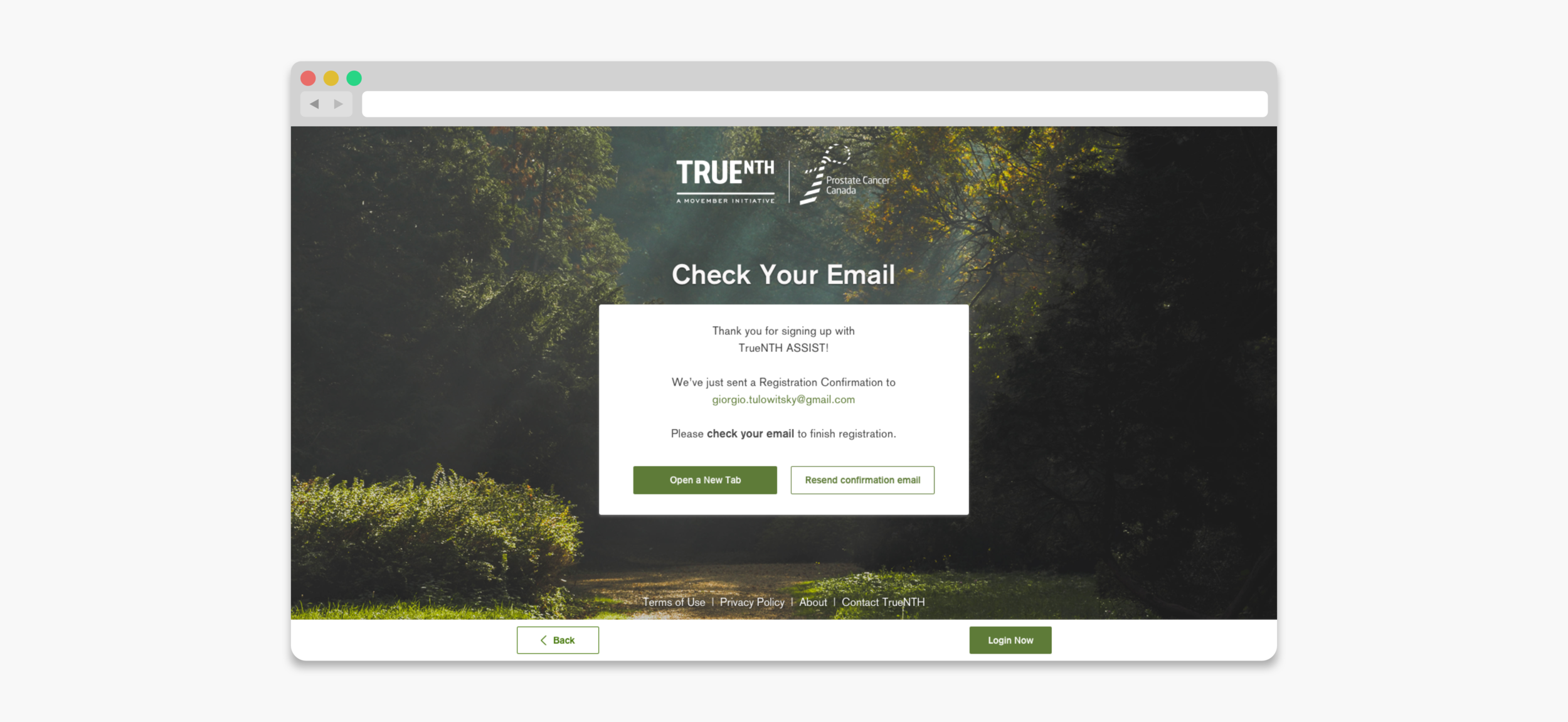
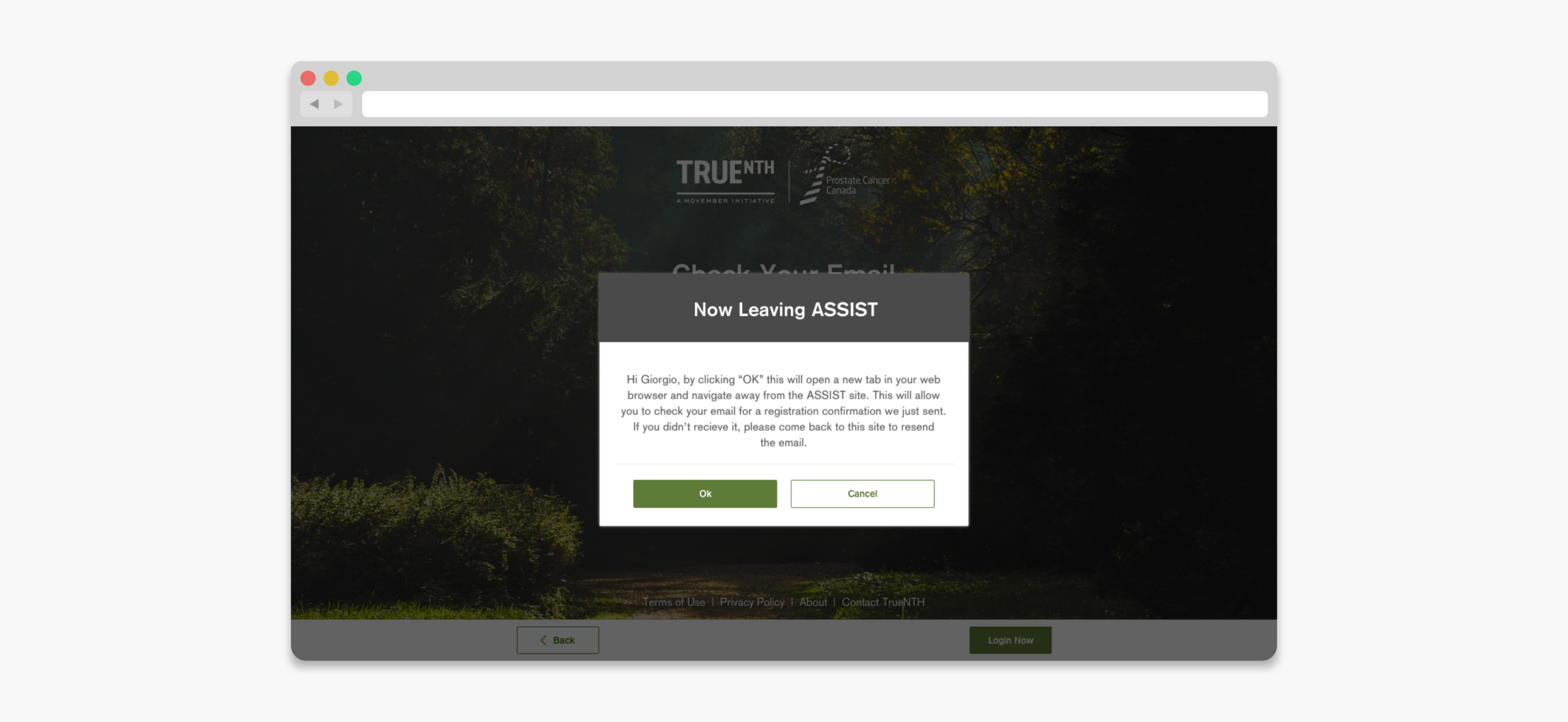
Registration
Patients and their partners need a referral code from their physician to register for the portal. This referral creates the impression of an actual doctor referral, which adds a layer of trust.
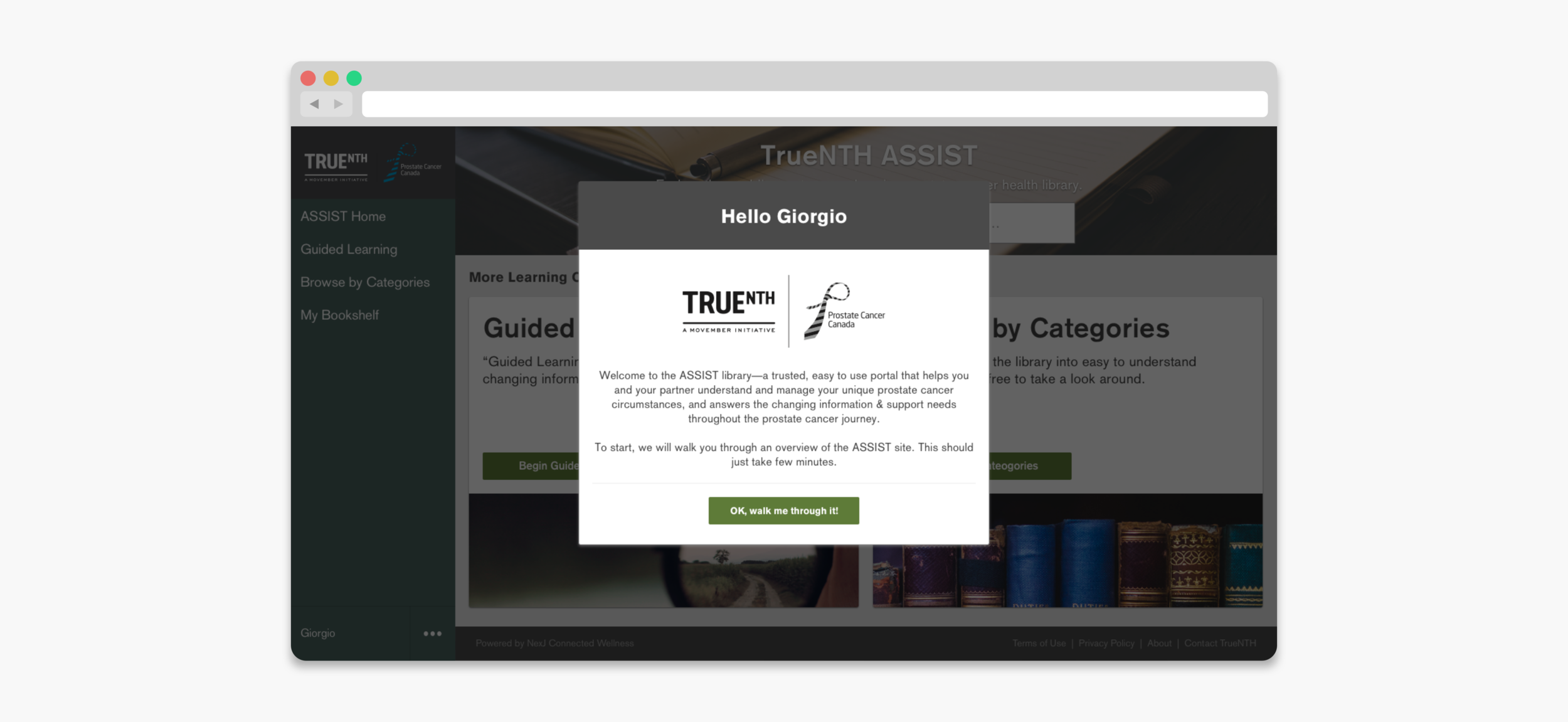
Home page and coach marks
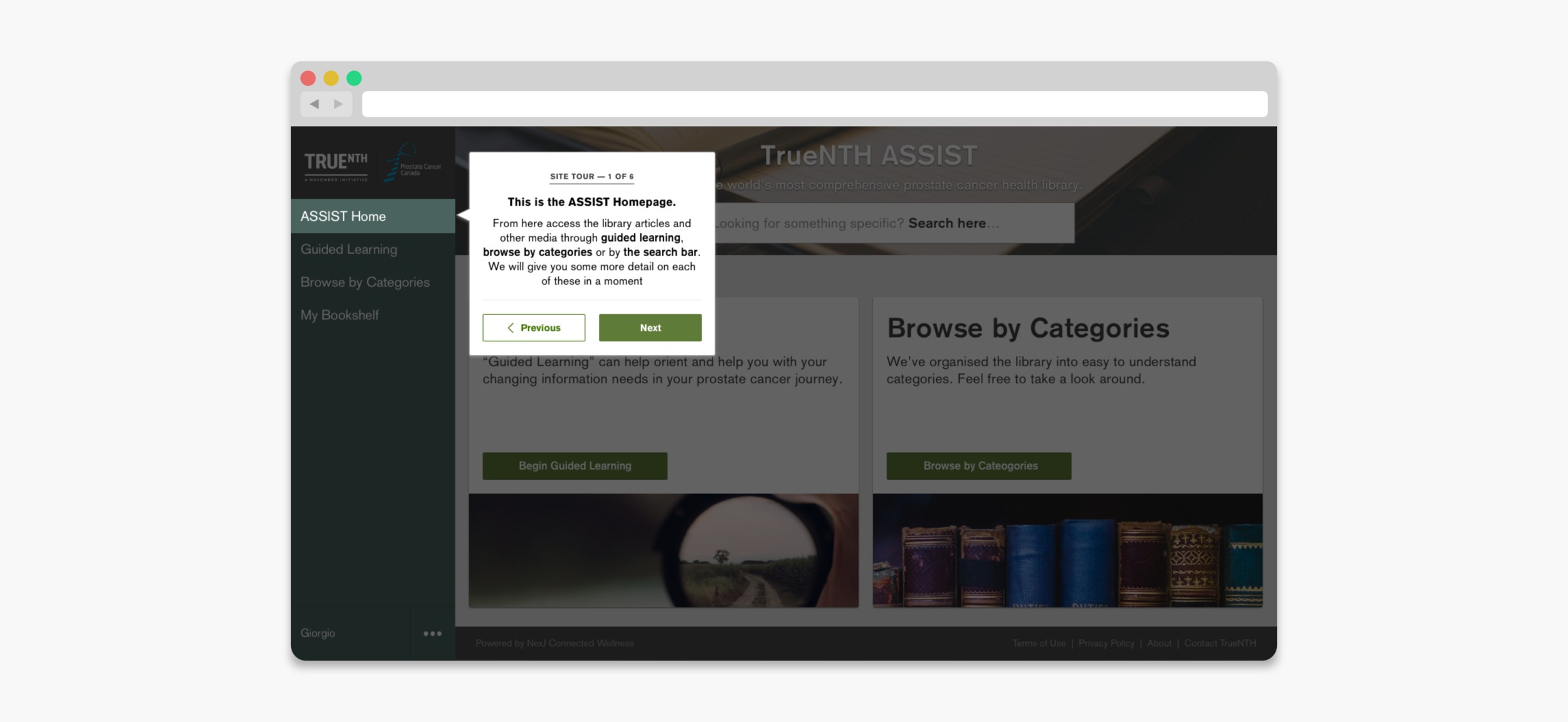
After logging in for the first time, the user gets walked through the portal’s main functionalities. Coach-marks explain what options there are and how to use them.
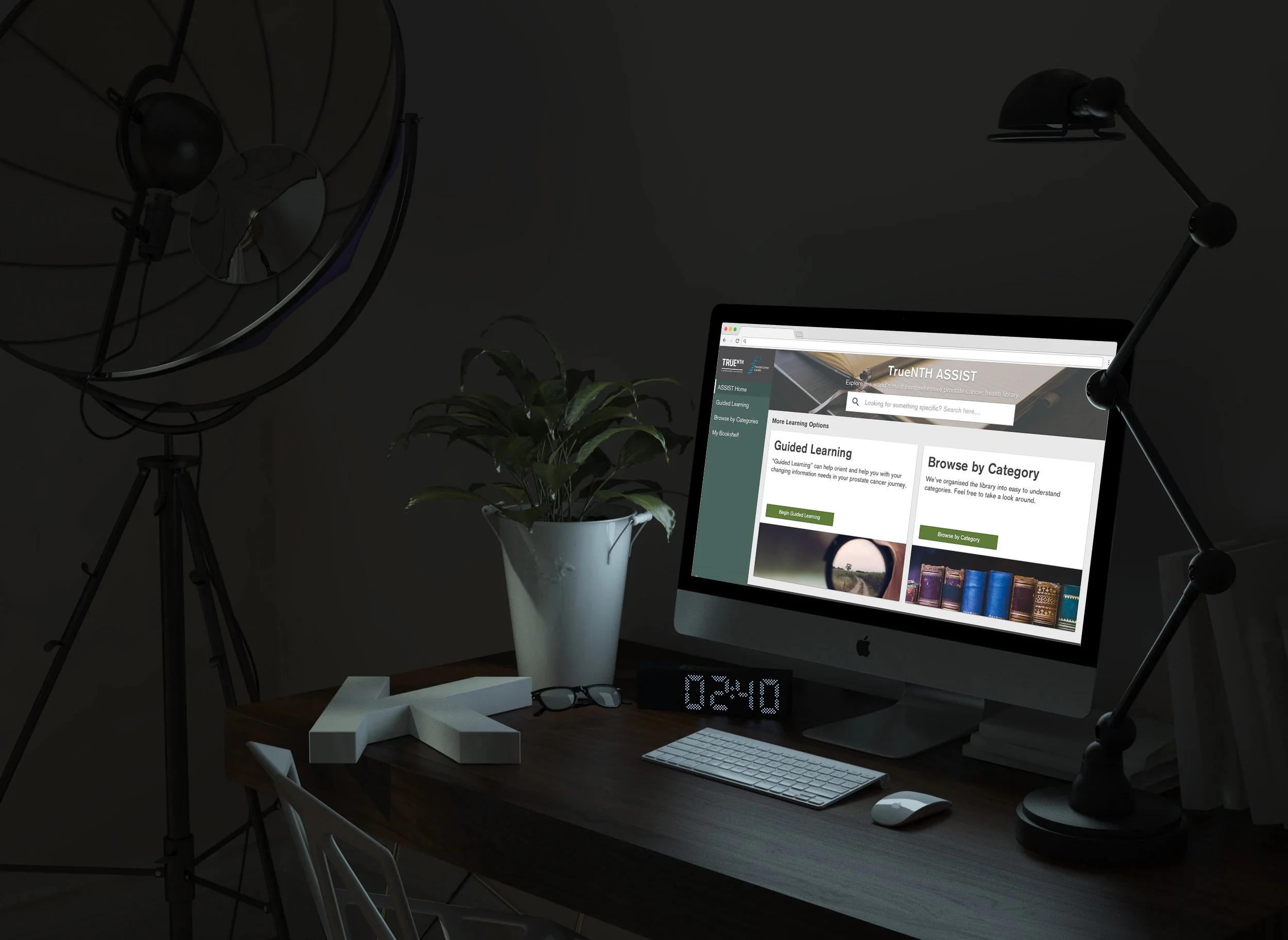
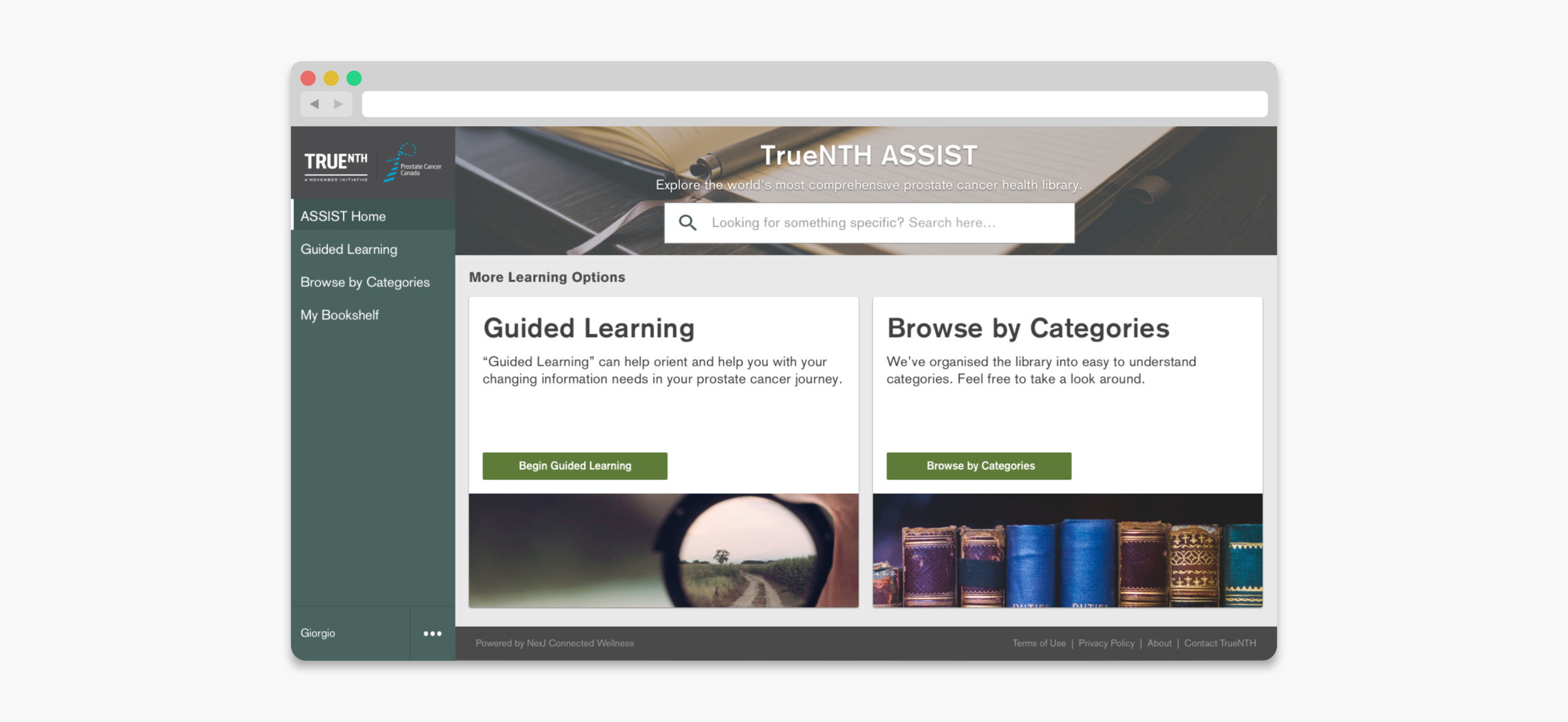
There are three ways to navigate the portal: “search”, “browse” and “guided learning”. These navigation routes cover the various search goals and levels of expertise of the user group.
Guided learning
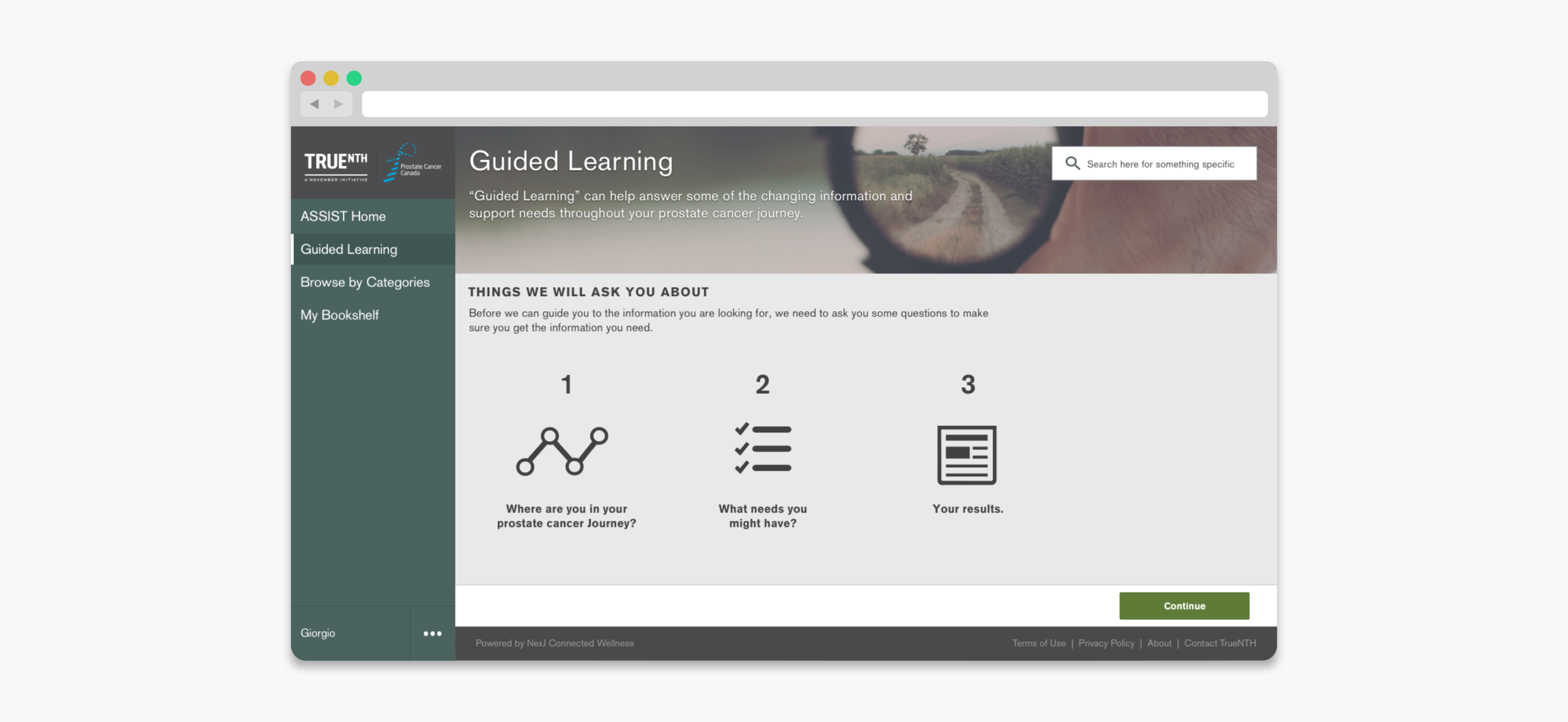
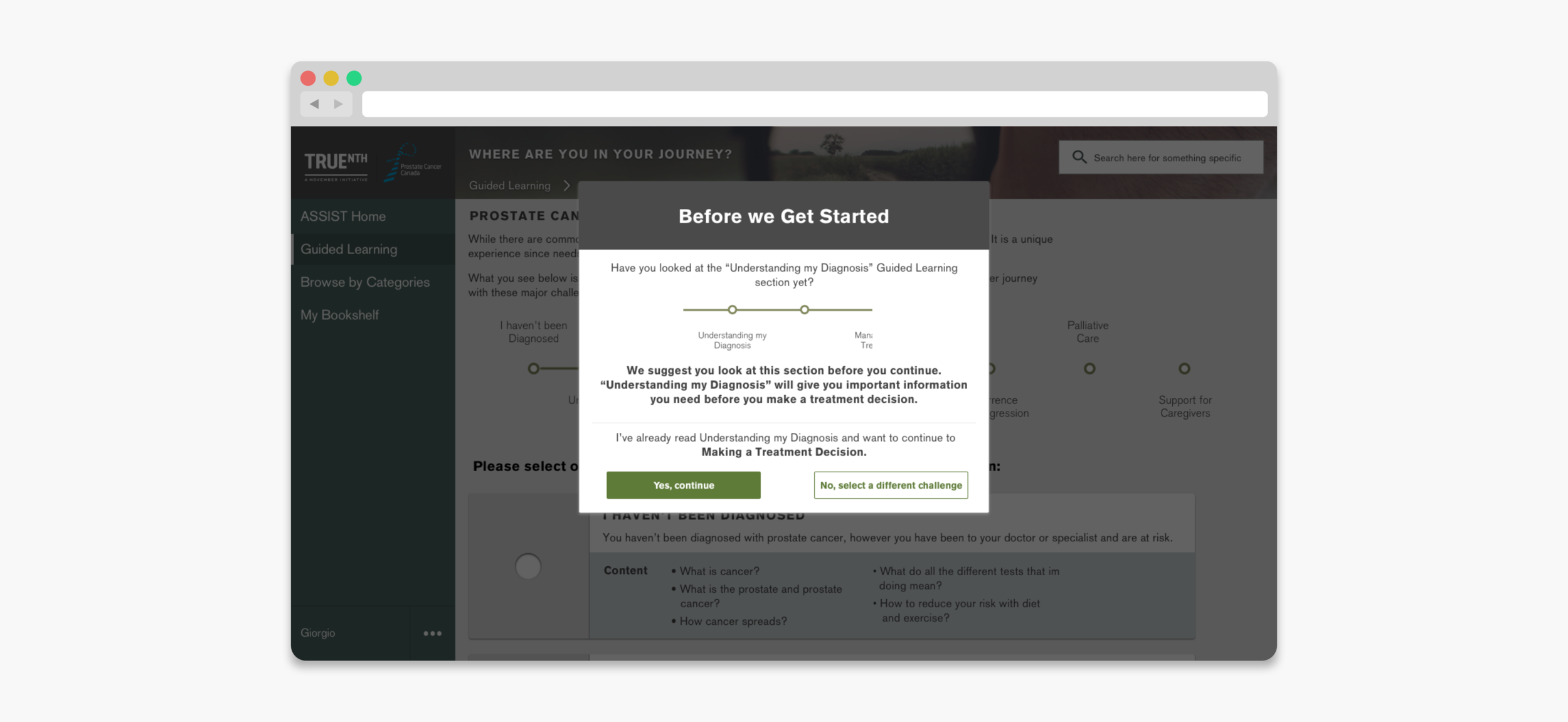
The “Guided Learning” section of the web-portal was the most challenging part of this project, but it also turned out to be the most useful functionality. It was developed to walk patients and partners through all there is to know about a specific stage of the journey. After many iterations we landed on a journey with specific milestones that most (former) patients and partners could relate to.


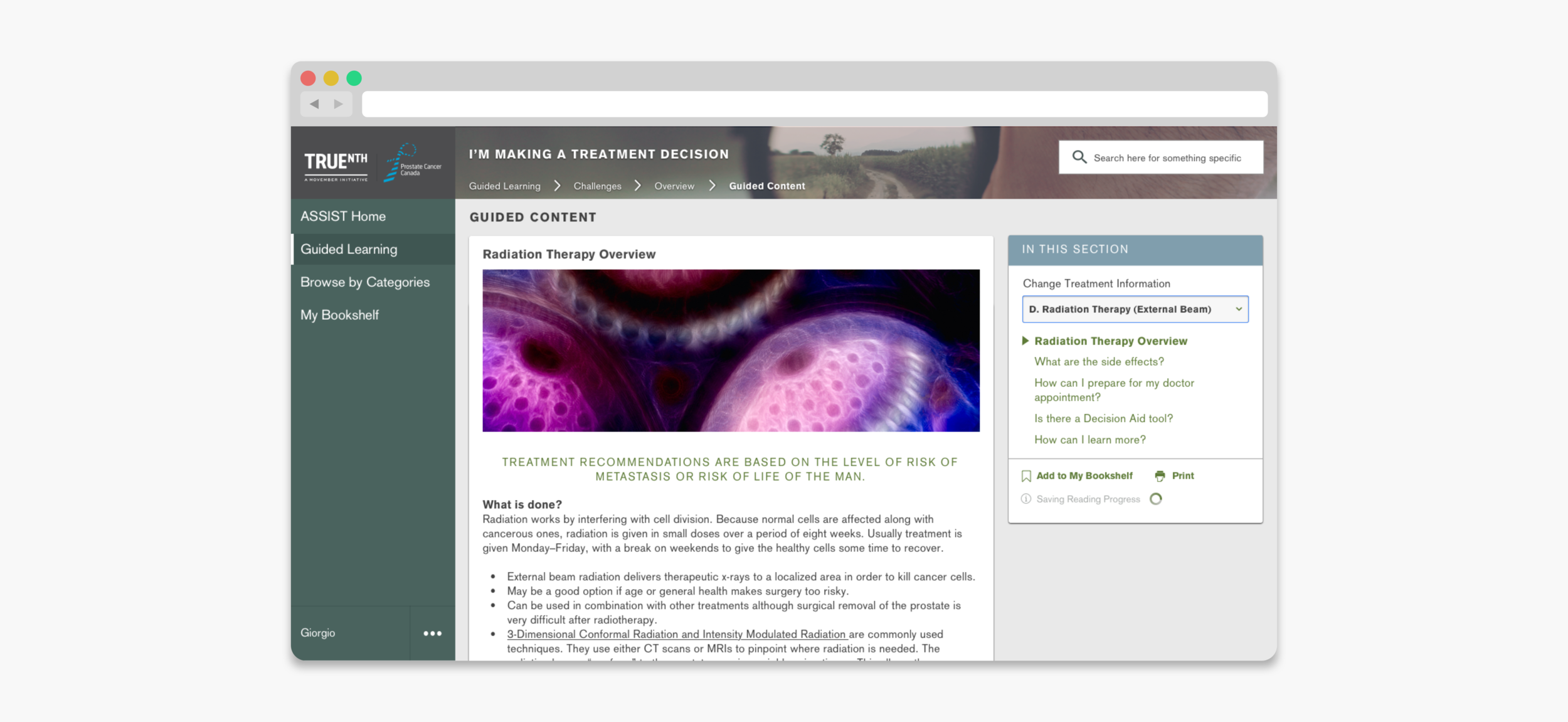
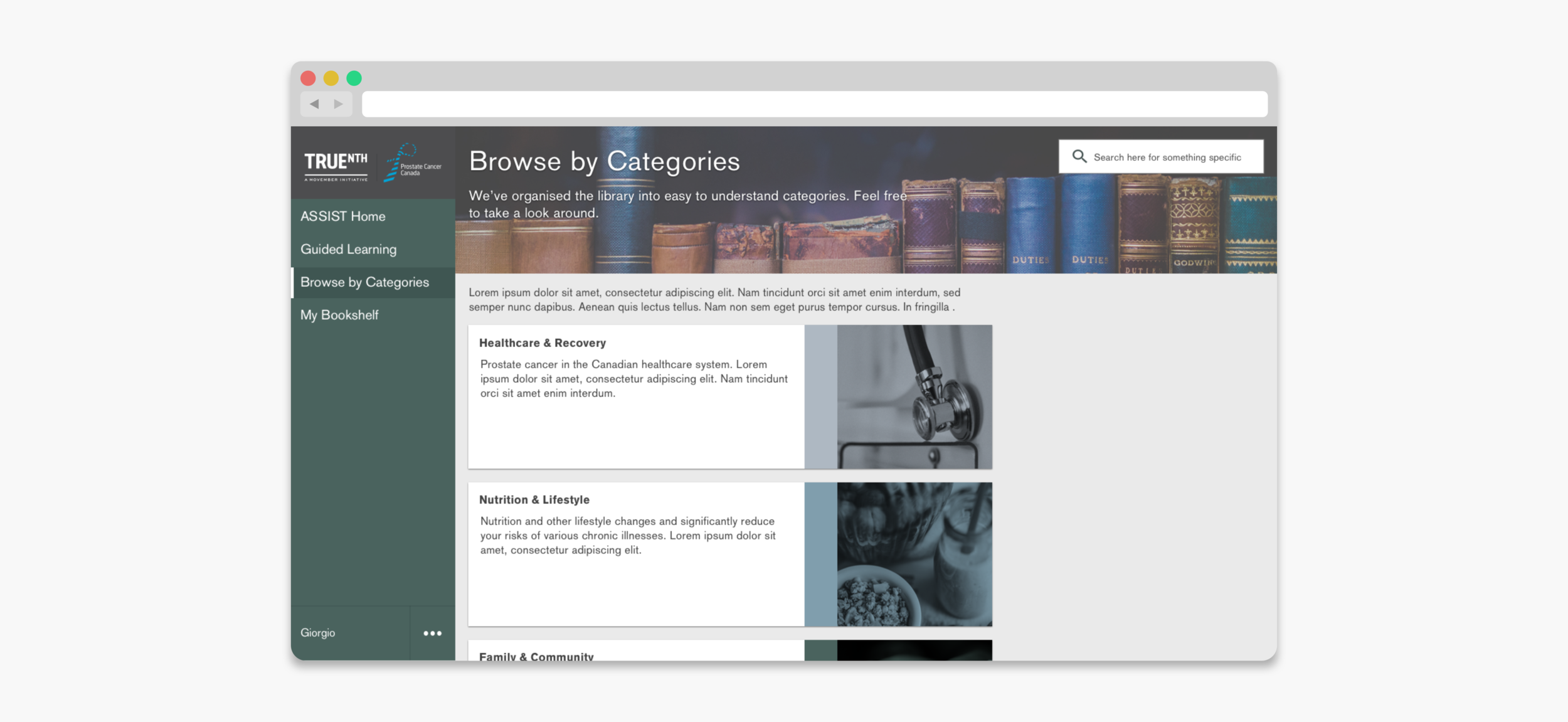
Browse by categories
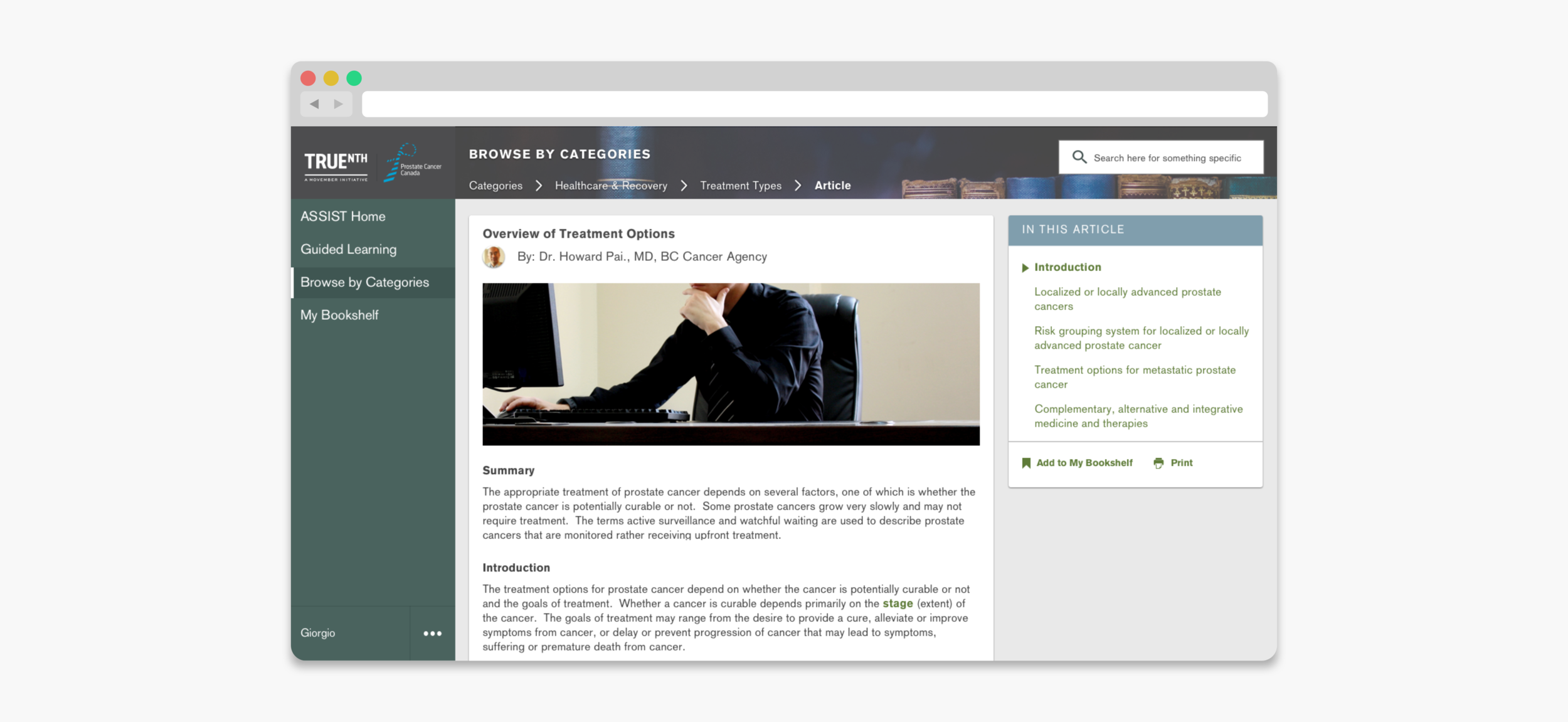
“Browse by categories” lets users go through several major categories that narrow down into subcategories. Articles have their own sub-navigation and clearly show who wrote the article and what organization it was published by.
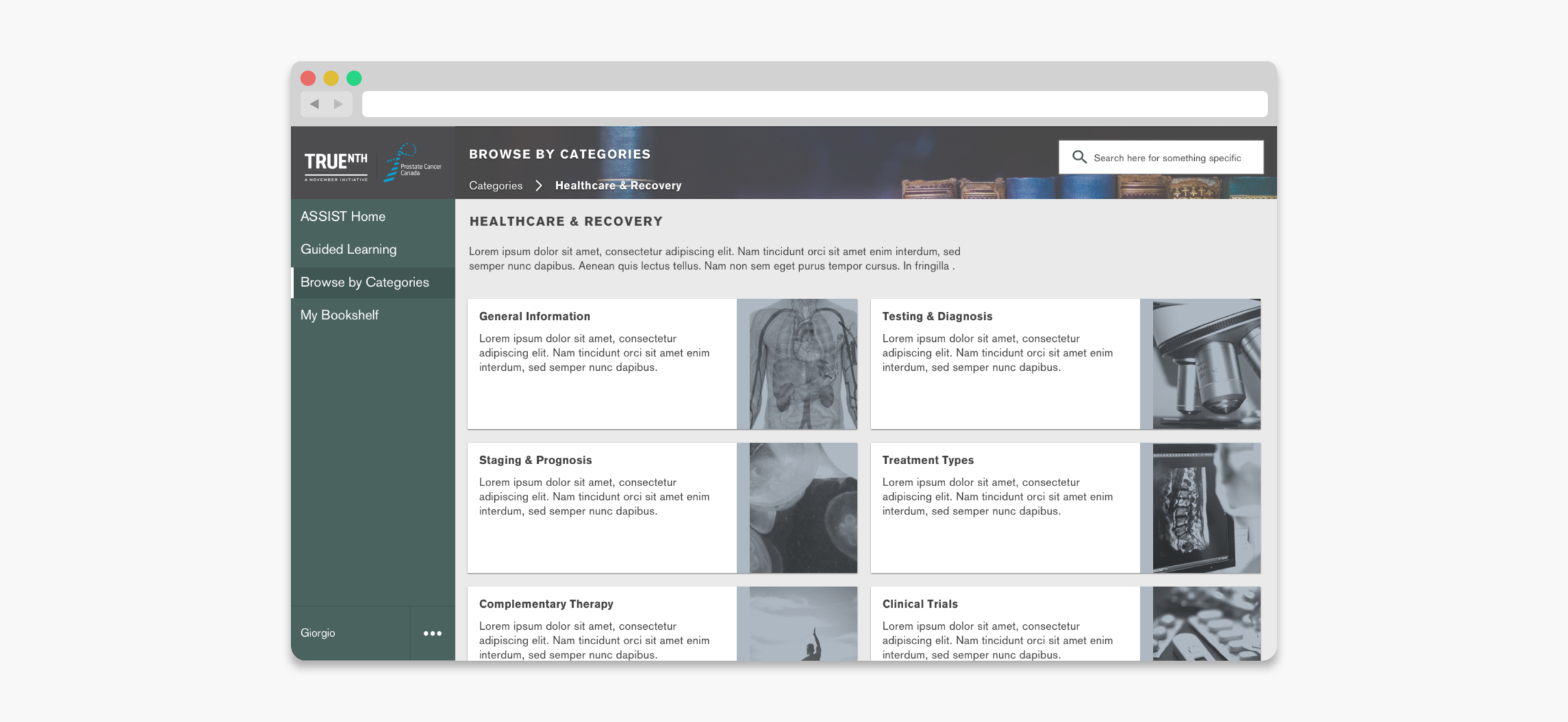
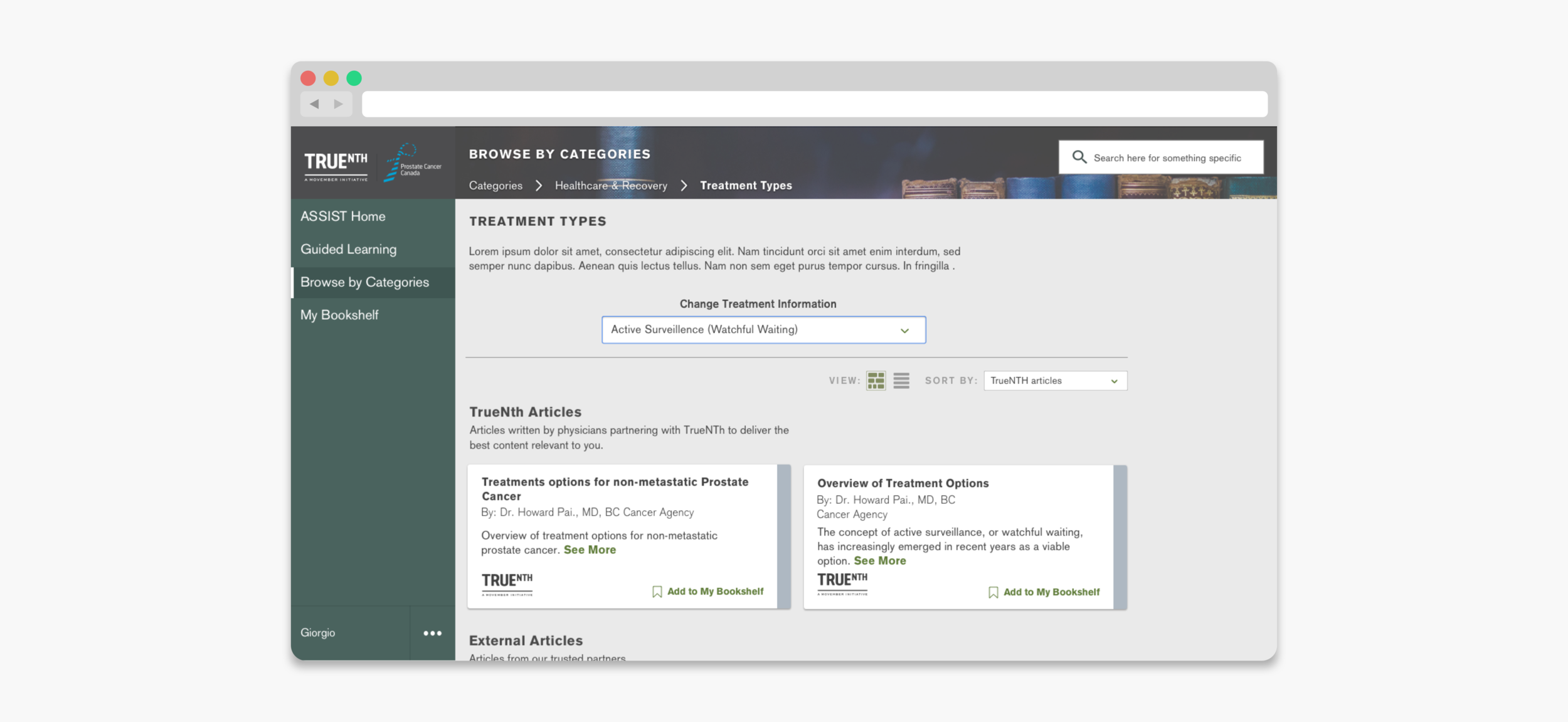
Saved and previously read articles
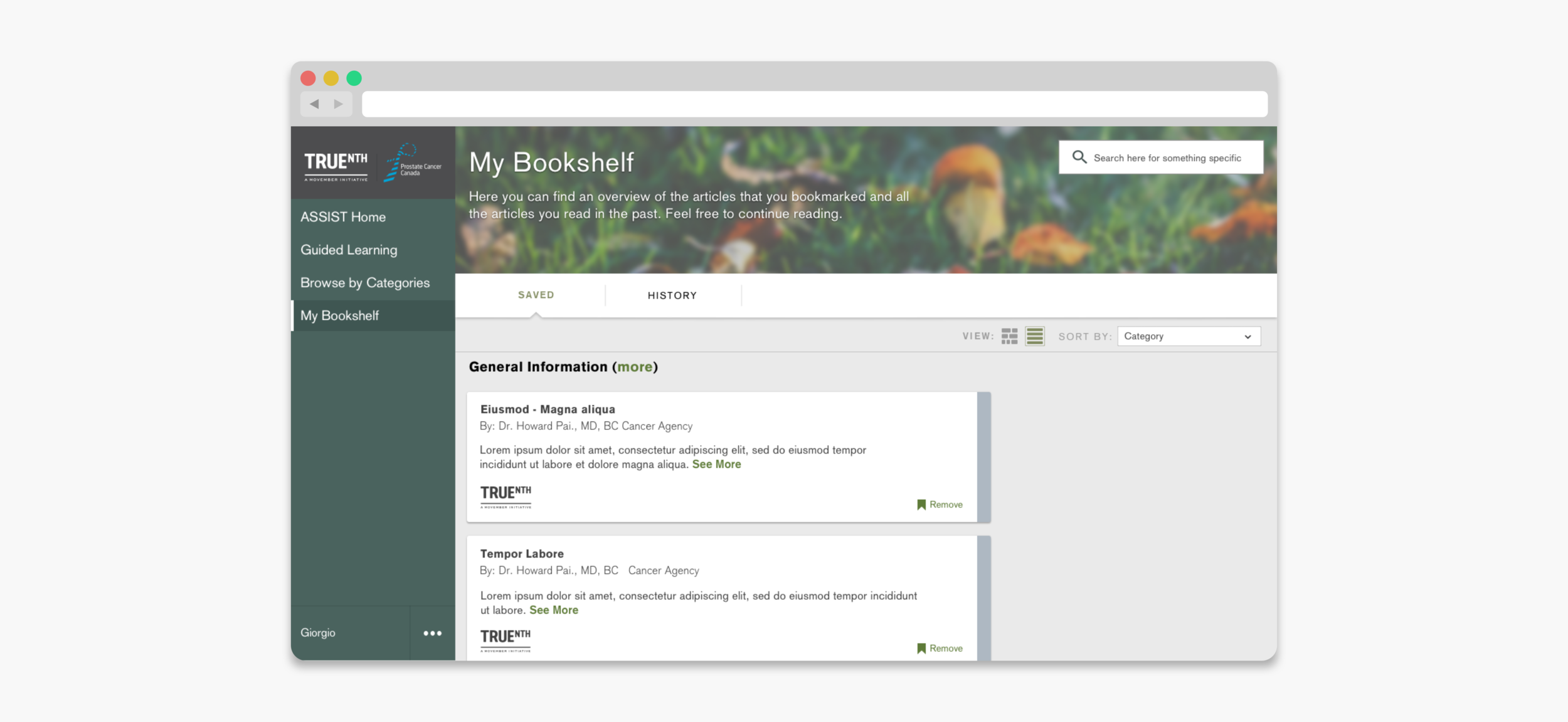
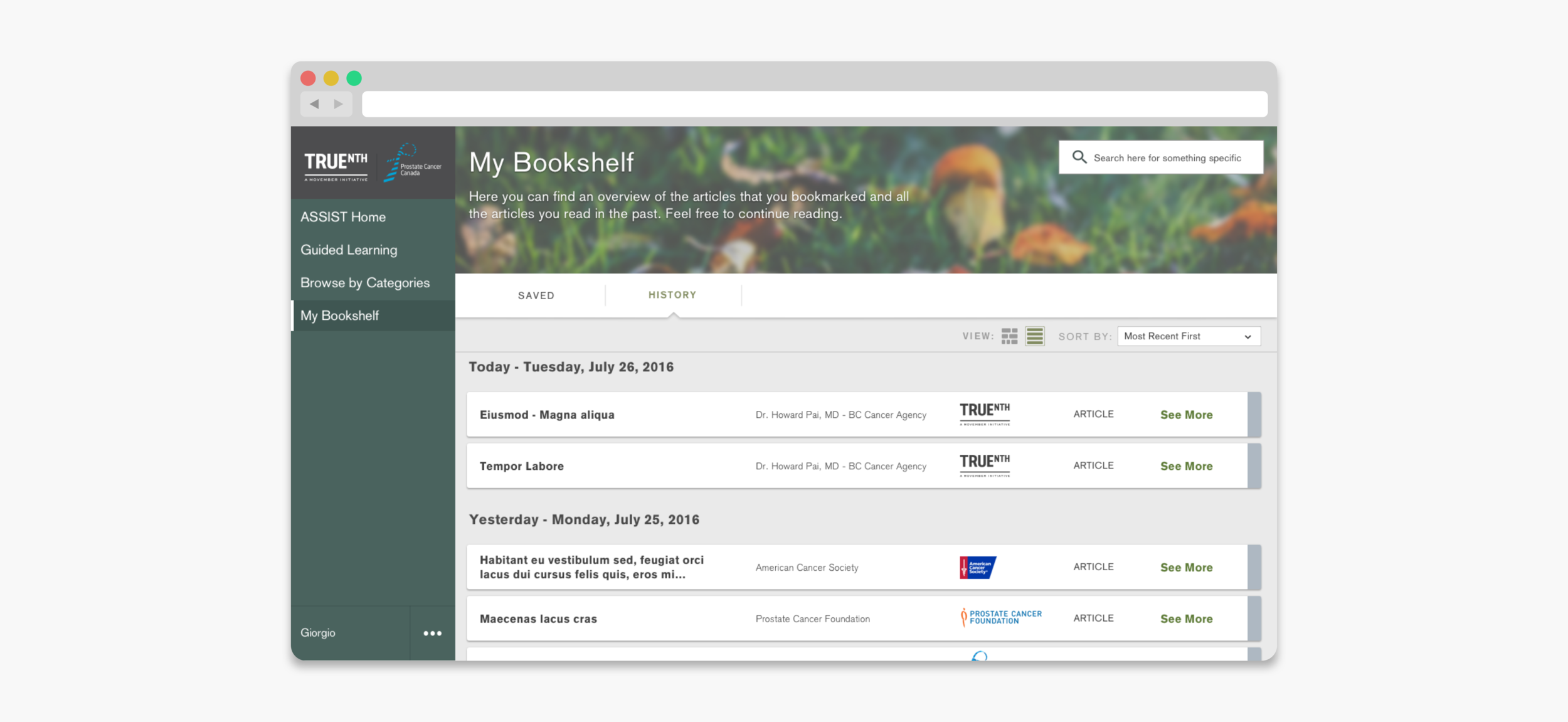
To help the patients and their partners find back articles that they read or wanted to read we added a ‘bookshelf’ section. Here they can see their reading history and their saved articles.